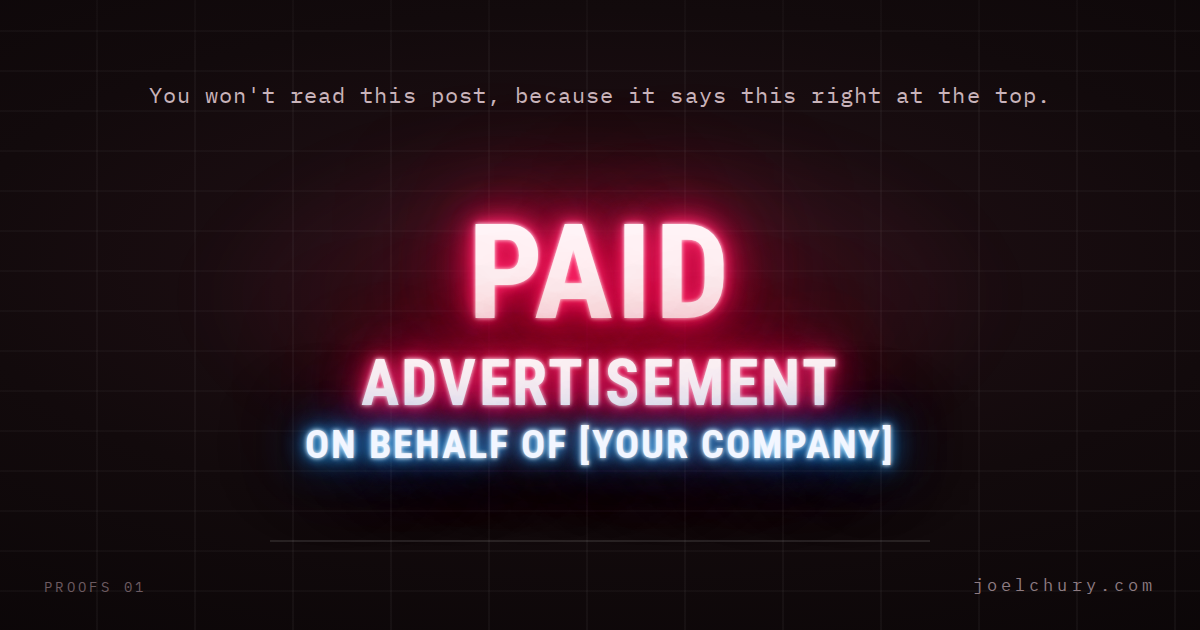
Spanning over twenty years I've written investor pages and articles for other people's campaigns. Some of the best work I did went out with a big NEON sign over the top of it telling the reader not to believe it.
Not because anything underneath it was wrong. Every number sourced, every claim footnoted to a primary document, approved by the company's own people before it ran.
It carried that NEON sign because of who paid for it.
First, this isn't a case against the people who sell attention
I was one of them for two decades and I'd defend most of what I wrote. They find your reader. They get them to look up. That part is genuinely hard and it's worth every dollar you pay for it. Keep them.
But nobody's job was the place that click lands. So it defaults to your homepage, and your homepage wasn't built to catch a reader who arrived mid-thought, about one specific thing, on the strength of one specific argument somebody made for you somewhere else.
That's the gap. Here's why it's wider than you think.
Where the NEON sign came from
In January 2023 the British Columbia Securities Commission decided a case called Re Stock Social Inc. First time anyone in Canada interpreted section 52(2) of the Securities Act. It binds issuers and promoters in BC, and Alberta has since adopted the same reading.
Section 52(2) says that if a person is doing investor relations for an issuer, every record they put out has to clearly and conspicuously disclose that it was issued on behalf of that issuer.
The panel spelled out what clear and conspicuous means. Plain language, prominent spot, prominent font, at or very close to the beginning of the record. Their example wording was "Paid advertisement on behalf of" and then the issuer's name.
Then they closed the doors.
It's the right law and I wouldn't change it. Someone paid to put that page in front of you, and you should know it before you read a word.
But look what it does to the work
You can hire the best writer in the business, source every fact, spend weeks getting the argument exactly right, and your reader's eye still lands on PAID ADVERTISEMENT ON BEHALF OF YOUR COMPANY before it reaches your headline.
Nobody weighs the disclosure regime against the quality of the evidence. They feel the sign, in about a second, and it colours every word underneath.
Now put that same page on your own domain
Same argument. Same evidence. But in your authoritative voice.
No sign at the top, because there's nobody in between. Section 52(2) is about someone speaking on your behalf, and a company speaking for itself isn't that. What sits at the bottom instead is the forward-looking statements block from every press release you've ever issued. The one your shareholders skim past without flinching, because it's the sound of a company talking about itself.
The only thing that changed is who's doing the talking. That was what your reader was reacting to the whole time.
You're already paying for the attention. The only question left is what it lands on, and whether that thing is yours or rented.
And you can have both.